

News
The latest news, editorials, and conversations shaping Alberta’s business environment.
Stay informed with timely updates, expert insights, and in-depth conversations.
Should Canada Emulate the UK’s Net-Zero Pathway?
I am picking up some chatter within certain circles in Alberta and Canada that the UK’s net-zero framework is a plan to emulate. This position is ostensibly informed by an invitation-only whirlwind tour of handpicked UK net-zero projects and initiatives attended by a group of Canadians. My fellow Canadians were duly impressed by what they were shown and came away, after a few days, with the idea that the people and industries are united in a “Team UK” approach. There were several key “takeaways” from the tour but the top three included: an aggressive net-zero timeline that “everybody appears to be on board with”; the UK has a new type of increased decarbonized industrial production guided and driven by government industrial planning; and a serious concern with energy security.
I am picking up some chatter within certain circles in Alberta and Canada that the UK’s net-zero framework is a plan to emulate. This position is ostensibly informed by an invitation-only whirlwind tour of handpicked UK net-zero projects and initiatives attended by a group of Canadians. My fellow Canadians were duly impressed by what they were shown and came away, after a few days, with the idea that the people and industries are united in a “Team UK” approach. There were several key “takeaways” from the tour but the top three included: an aggressive net-zero timeline that “everybody appears to be on board with”; the UK has a new type of increased decarbonized industrial production guided and driven by government industrial planning; and a serious concern with energy security.
Controlled Environment Agriculture
To thrive, the vertical farming sector must address broader market needs by expanding beyond microgreens and leafy greens to include a wider variety of produce. This diversification, along with managing unit costs, ensuring power reliability and affordability and developing a skilled workforce, are crucial for meeting retailer and consumer demands.
To thrive, the vertical farming sector must address broader market needs by expanding beyond microgreens and leafy greens to include a wider variety of produce. This diversification, along with managing unit costs, ensuring power reliability and affordability and developing a skilled workforce, are crucial for meeting retailer and consumer demands.
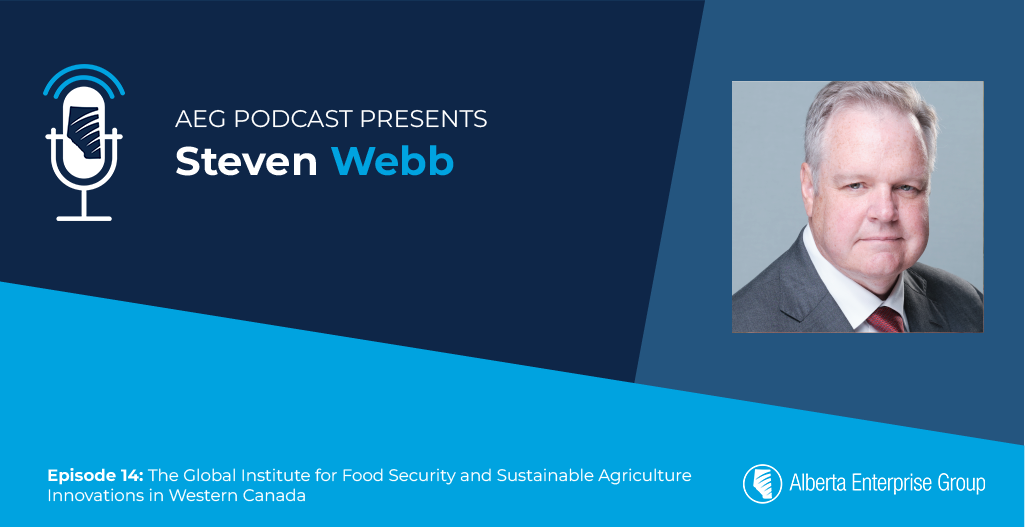
AEG Podcast, Ep 14: The Global Institute for Food Security and Sustainable Agriculture Innovations in Western Canada
Catherine Brownlee interviews Steve Webb from the Global Institute for Food Security in this podcast. They discuss the institute's objective to promote innovative and worldwide sustainable food solutions through industry-government-academic partnership. They discuss the challenges and opportunities for innovation in agriculture and food, and highlight the sustainable outcomes of Western Canada's adoption of innovative technologies like no-till and herbicide-tolerant canola. The conversation emphasizes the importance of partnerships and collaborations between governments, academia, and industry to bring market-relevant innovations to consumers and producers worldwide.
Catherine Brownlee interviews Steve Webb from the Global Institute for Food Security in this podcast. They discuss the institute's objective to promote innovative and worldwide sustainable food solutions through industry-government-academic partnership. They discuss the challenges and opportunities for innovation in agriculture and food, and highlight the sustainable outcomes of Western Canada's adoption of innovative technologies like no-till and herbicide-tolerant canola. The conversation emphasizes the importance of partnerships and collaborations between governments, academia, and industry to bring market-relevant innovations to consumers and producers worldwide.