

News
The latest news, editorials, and conversations shaping Alberta’s business environment.
Stay informed with timely updates, expert insights, and in-depth conversations.
AEG and ICBA Take on Trudeau Government’s Flawed Bill C-59
CALGARY – Earlier this week, the Alberta Enterprise Group (AEG) and the Independent Contractors and Businesses Association (ICBA) jointly filed a constitutional challenge against the federal government, over its new ‘Greenwashing’ law which unreasonably restricts free speech.
The challenge, filed in the Court of King’s Bench of Alberta, targets sections 236 and 239 of Bill C-59, the Fall Economic Statement Implementation Act, 2023, which amended the Competition Act in ways that severely limit the business community’s ability to discuss environmental impacts. These provisions impose unreasonable restrictions on the dissemination of truthful and fair-minded information, striking at the heart of free expression and open debate in Canada.
CALGARY – Earlier this week, the Alberta Enterprise Group (AEG) and the Independent Contractors and Businesses Association (ICBA) jointly filed a constitutional challenge against the federal government, over its new ‘Greenwashing’ law which unreasonably restricts free speech.
The challenge, filed in the Court of King’s Bench of Alberta, targets sections 236 and 239 of Bill C-59, the Fall Economic Statement Implementation Act, 2023, which amended the Competition Act in ways that severely limit the business community’s ability to discuss environmental impacts. These provisions impose unreasonable restrictions on the dissemination of truthful and fair-minded information, striking at the heart of free expression and open debate in Canada.
Alberta’s Pre-Election Budget Biggest Surprise? Fiscal Prudence!
Pre-election budgets are rarely admirable. Money is spread around like pixie dust to curry the support of voters and to knee-cap opposition parties by borrowing their ideas. To a certain extent, the pre-election good news budget that Alberta Finance Minister Travis Toews delivered Tuesday follows this time-honoured political path, helped by $27.5 billion in oil and gas revenues in the 2022/23 fiscal year. And so, it is easy to chide the budget for populist policies like freezing insurance rates and capping post-secondary tuition fee increases at 2 per cent and for industrial policy measures for politically favoured industries (such as agricultural processing and film and television production). And there is the usual scattering of minor tax credits instead of a general cut in personal taxes – with no mention of a tax review geared to major reform, which the United Conservative Party proposed when it took office.
Pre-election budgets are rarely admirable. Money is spread around like pixie dust to curry the support of voters and to knee-cap opposition parties by borrowing their ideas. To a certain extent, the pre-election good news budget that Alberta Finance Minister Travis Toews delivered Tuesday follows this time-honoured political path, helped by $27.5 billion in oil and gas revenues in the 2022/23 fiscal year. And so, it is easy to chide the budget for populist policies like freezing insurance rates and capping post-secondary tuition fee increases at 2 per cent and for industrial policy measures for politically favoured industries (such as agricultural processing and film and television production). And there is the usual scattering of minor tax credits instead of a general cut in personal taxes – with no mention of a tax review geared to major reform, which the United Conservative Party proposed when it took office.
AEG Podcast, Ep 14: The Global Institute for Food Security and Sustainable Agriculture Innovations in Western Canada
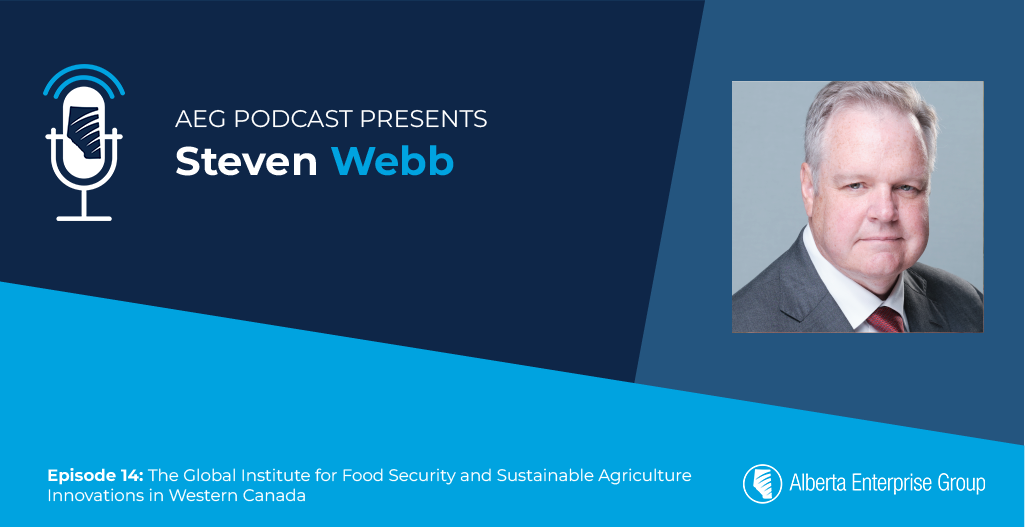
Catherine Brownlee interviews Steve Webb from the Global Institute for Food Security in this podcast. They discuss the institute's objective to promote innovative and worldwide sustainable food solutions through industry-government-academic partnership. They discuss the challenges and opportunities for innovation in agriculture and food, and highlight the sustainable outcomes of Western Canada's adoption of innovative technologies like no-till and herbicide-tolerant canola. The conversation emphasizes the importance of partnerships and collaborations between governments, academia, and industry to bring market-relevant innovations to consumers and producers worldwide.
Catherine Brownlee interviews Steve Webb from the Global Institute for Food Security in this podcast. They discuss the institute's objective to promote innovative and worldwide sustainable food solutions through industry-government-academic partnership. They discuss the challenges and opportunities for innovation in agriculture and food, and highlight the sustainable outcomes of Western Canada's adoption of innovative technologies like no-till and herbicide-tolerant canola. The conversation emphasizes the importance of partnerships and collaborations between governments, academia, and industry to bring market-relevant innovations to consumers and producers worldwide.