

News
The latest news, editorials, and conversations shaping Alberta’s business environment.
Stay informed with timely updates, expert insights, and in-depth conversations.

Update – Competition Bureau Draft Guidelines
We will be closely reviewing the Competition Bureau’s Draft Guidelines in the coming weeks, and will be following the public consultation process more generally. However, our preliminary view is that the Draft Guidelines, if and when adopted, will do nothing to meaningfully clarify or limit the scope of the new provisions, and therefore will not in any way mitigate the significant restrictions on free expression imposed by the new provisions.
We will be closely reviewing the Competition Bureau’s Draft Guidelines in the coming weeks, and will be following the public consultation process more generally. However, our preliminary view is that the Draft Guidelines, if and when adopted, will do nothing to meaningfully clarify or limit the scope of the new provisions, and therefore will not in any way mitigate the significant restrictions on free expression imposed by the new provisions.
Are Worms the Future of Regenerative Agriculture?
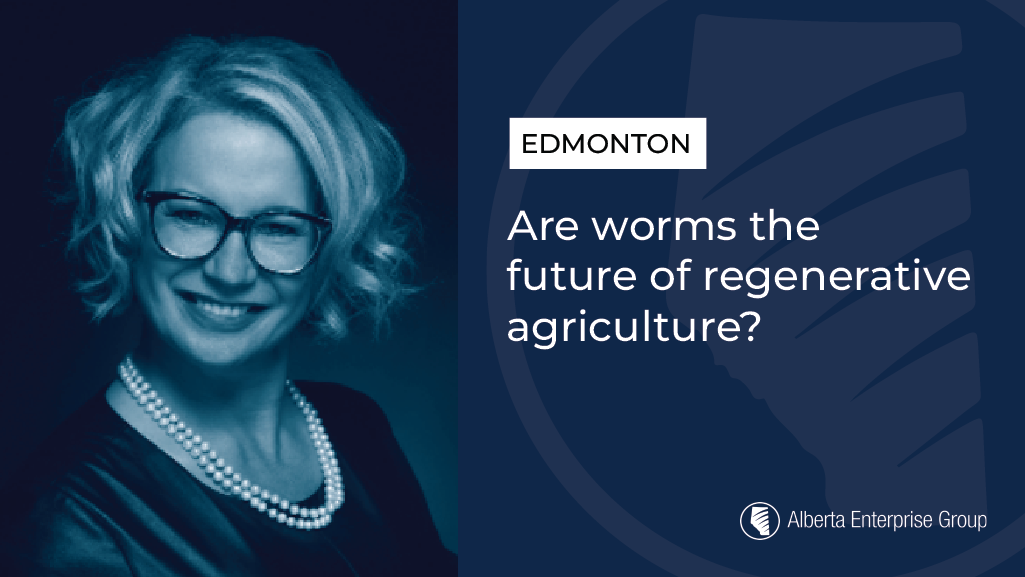
Our friend Michael Launer is an Albertan and a strong advocate for green technologies. He and his partners founded Annelida in 2018, an innovative ag-tech company that is positioned to disrupt conventional thinking in the agriculture sector. They have looked at the wider issues of conventional fertilizer use and its impacts on soil biology for producers. Without natural replenishment of microbiology back into the ground, the use of traditional fertilizers leads to depletion and degradation of the soil over time. Their team took on this challenge and is producing enhanced nutrient efficiency formulas – modern and effective regenerative ag solutions derived directly from nature.
Our friend Michael Launer is an Albertan and a strong advocate for green technologies. He and his partners founded Annelida in 2018, an innovative ag-tech company that is positioned to disrupt conventional thinking in the agriculture sector. They have looked at the wider issues of conventional fertilizer use and its impacts on soil biology for producers. Without natural replenishment of microbiology back into the ground, the use of traditional fertilizers leads to depletion and degradation of the soil over time. Their team took on this challenge and is producing enhanced nutrient efficiency formulas – modern and effective regenerative ag solutions derived directly from nature.
What Companies are Getting Wrong About Doing Good (Webinar)
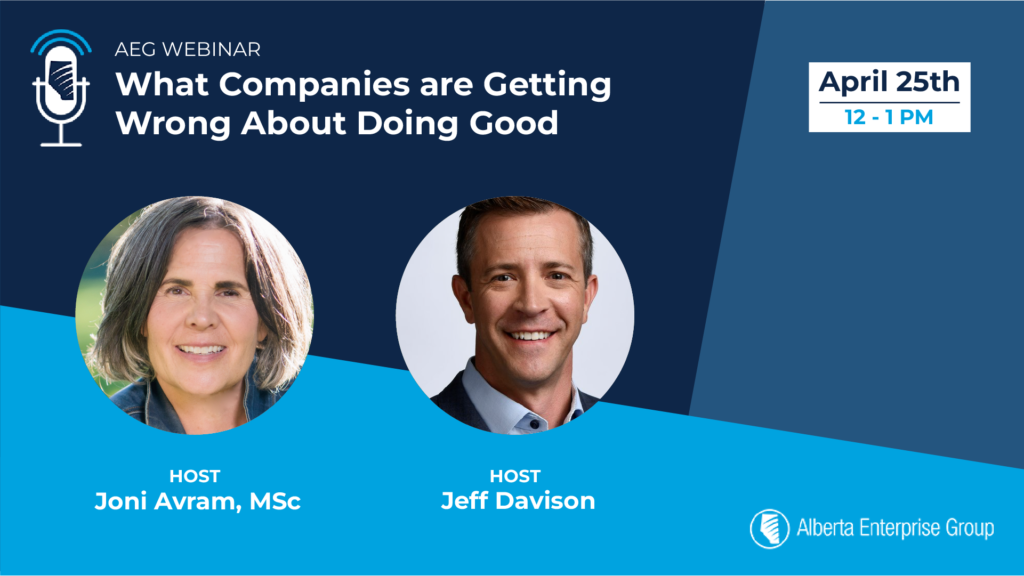
This is a webinar hosted by Jeff Davidson, CEO of the Prostate Cancer Center in Calgary, on the topic of corporate social activism. The discussion focuses on the importance of businesses engaging in social change to meet the expectations of their audiences, including employees, customers, shareholders, and investors. Joni Abram, an expert in social change, marketing, and behavioral science, joins Jeff to discuss the risks and potential impact of corporate social activism, and how businesses can approach it authentically to build goodwill and establish themselves as valuable members of the community. They also discuss the importance of tangible outcomes and impact, and give examples of good and bad corporate social activism. The webinar emphasizes that smaller companies can have a real impact on their communities and offers practical advice on how to achieve meaningful social change.
This is a webinar hosted by Jeff Davidson, CEO of the Prostate Cancer Center in Calgary, on the topic of corporate social activism. The discussion focuses on the importance of businesses engaging in social change to meet the expectations of their audiences, including employees, customers, shareholders, and investors. Joni Abram, an expert in social change, marketing, and behavioral science, joins Jeff to discuss the risks and potential impact of corporate social activism, and how businesses can approach it authentically to build goodwill and establish themselves as valuable members of the community. They also discuss the importance of tangible outcomes and impact, and give examples of good and bad corporate social activism. The webinar emphasizes that smaller companies can have a real impact on their communities and offers practical advice on how to achieve meaningful social change.