Practical guidance for Alberta business owners.

Practical guidance for Alberta business owners.
Alberta businesses have weathered economic downturns, labour shortages, policy changes and market volatility, but the uncertainty surrounding the referendum presents a different challenge: confidence in long-term stability. Cam explores the potential impact of the referendum debate on business confidence, investment and growth, and how Alberta’s strong economic fundamentals could help its business community navigate uncertainty and emerge stronger.
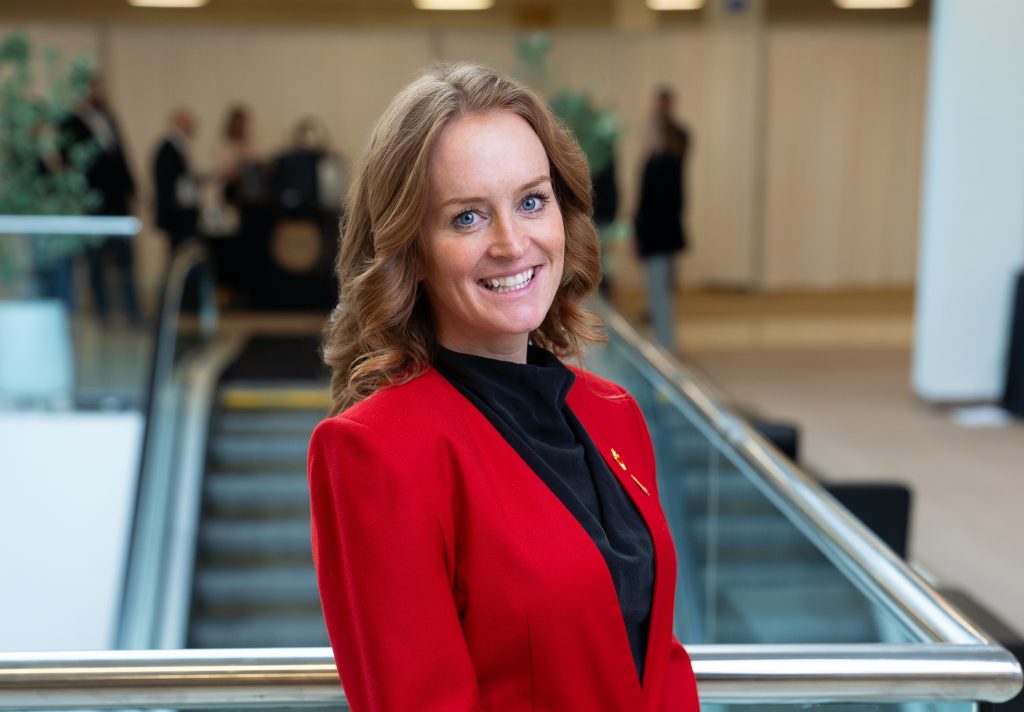
Alberta Enterprise Group (AEG) has appointed Erika Barootes as President, positioning the organization for a new chapter of expanded influence and advocacy for Alberta’s business community. With extensive leadership, communications and government experience, Barootes will focus initially on listening to members and strengthening AEG’s role as a clear, credible and constructive voice for business.
Two recent articles provide crucial insights into the complexities of tariffs and global trade, offering guidance for Canada’s response. John Mauldin discusses the economic dangers of tariffs, highlighting how they can trigger inflation and recession. Jack Mintz advises Canada to engage strategically with the U.S., diversify trade relationships, and address internal trade barriers.
As the Canadian Sustainability Standards Board (CSSB) introduces the Canadian Sustainability Disclosure Standards (CSDS), small and medium-sized enterprises (SMEs) must take proactive steps to ensure compliance. Take action now to assess your current practices, develop a governance framework, and create a reporting plan. Stay ahead of the competition and position your business for success in a sustainability-driven economy. Learn more about CSDS compliance and how to leverage it as a competitive advantage.
As the world shifts towards a more sustainable tomorrow, it’s time to rethink the role of nuclear energy in our transition to a low-carbon future. Learn how innovative companies like Aalo Atomics and Antares are pioneering a new era of clean energy with small, modular reactors that are safer, more efficient, and more cost-effective than ever before. Read the article now and join the conversation!
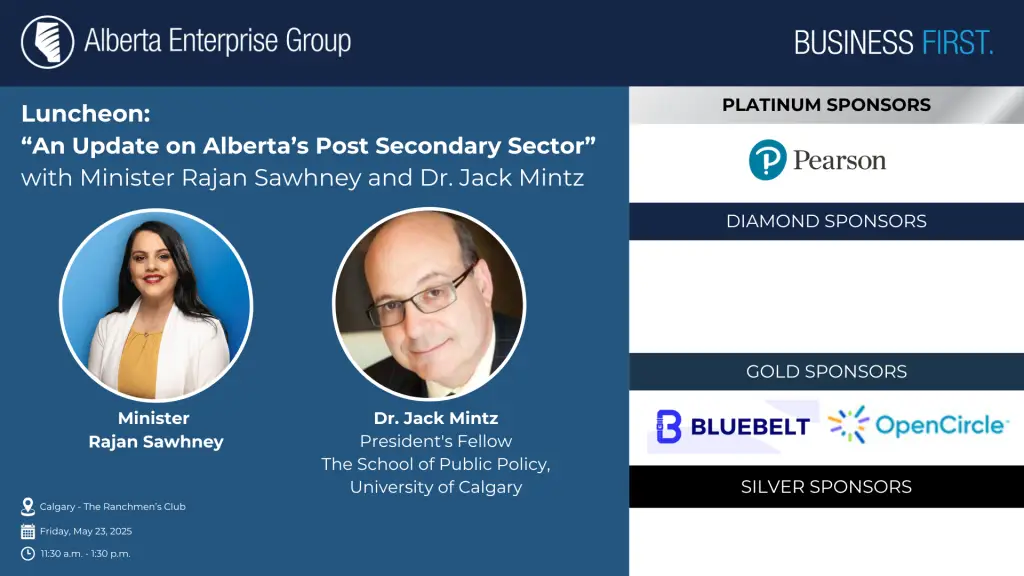
Join us for a discussion on the future of education with Minister Sawhney and Dr. Mintz – it’s going to be mind-blowing!
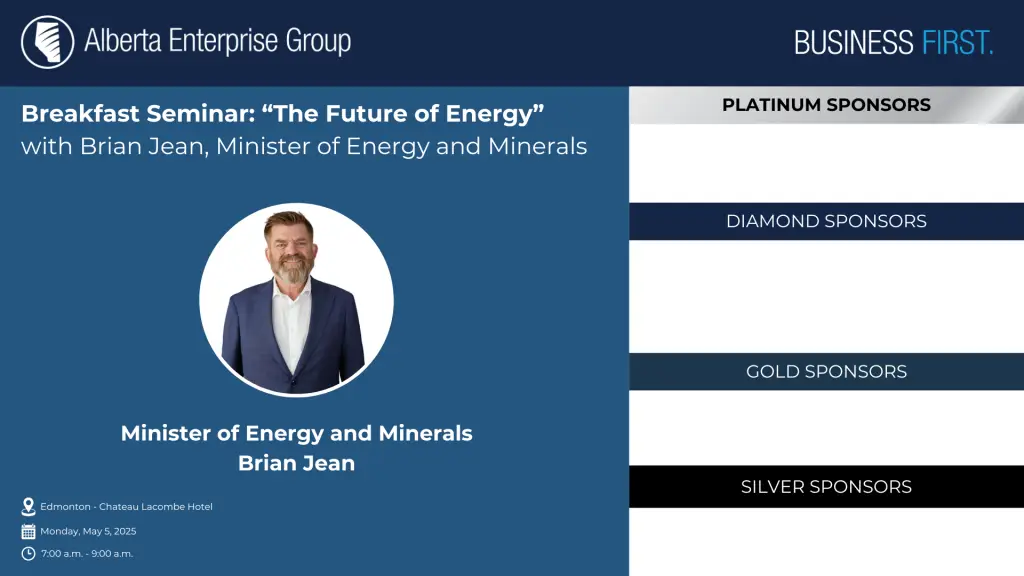
Join us for an exclusive conversation with Minister Brian Jean as we explore “The Future of Energy”. With his extensive experience in politics and industry, Minister Jean will share his insights on the latest trends and innovations shaping the energy landscape. From responsible resource development to emerging technologies, discover how Alberta is positioning itself as a leader in the global energy market. Don’t miss this opportunity to hear from a key decision-maker and engage in a discussion that will shape the future of energy in our province and beyond.

Discover the inspiring story of Lou MacEachern, a true embodiment of Alberta’s entrepreneurial spirit. From humble beginnings to building a business empire, Lou’s journey is a testament to hard work and generosity. With a legacy that continues to inspire entrepreneurs and philanthropists, Lou’s story is a must-read. Learn about his remarkable contributions, achievements, the impact he had on his community, and find out why Lou MacEachern will be remembered for generations to come as a Calgary icon and a shining example of integrity and community spirit.
In recent weeks, two major topics have dominated Canada’s economic conversation—tariffs and Canada’s new Prime Minister, Mark Carney. These issues are deeply connected, and with new leadership comes an opportunity for a fresh approach.
